
BlockBlast guide: clear lines and plan all three blocks
The tempting move is the piece that fits neatly right now. The useful move is the one that leaves a home for the other two. This BlockBlast guide explains the FoolFish block puzzle and the choices that keep its board playable.
How to play BlockBlast on the 8×8 board
Drag a block into an open part of the board. Fill every square in a row or column to clear that line. After placing all three blocks in the current set, you receive another set. The game ends when none of the remaining blocks can fit.
The shape matters as much as the number of empty squares. A scattered collection of single spaces will not hold a large solid block. Before dragging, trace the full outline of each piece against the gaps on your board.
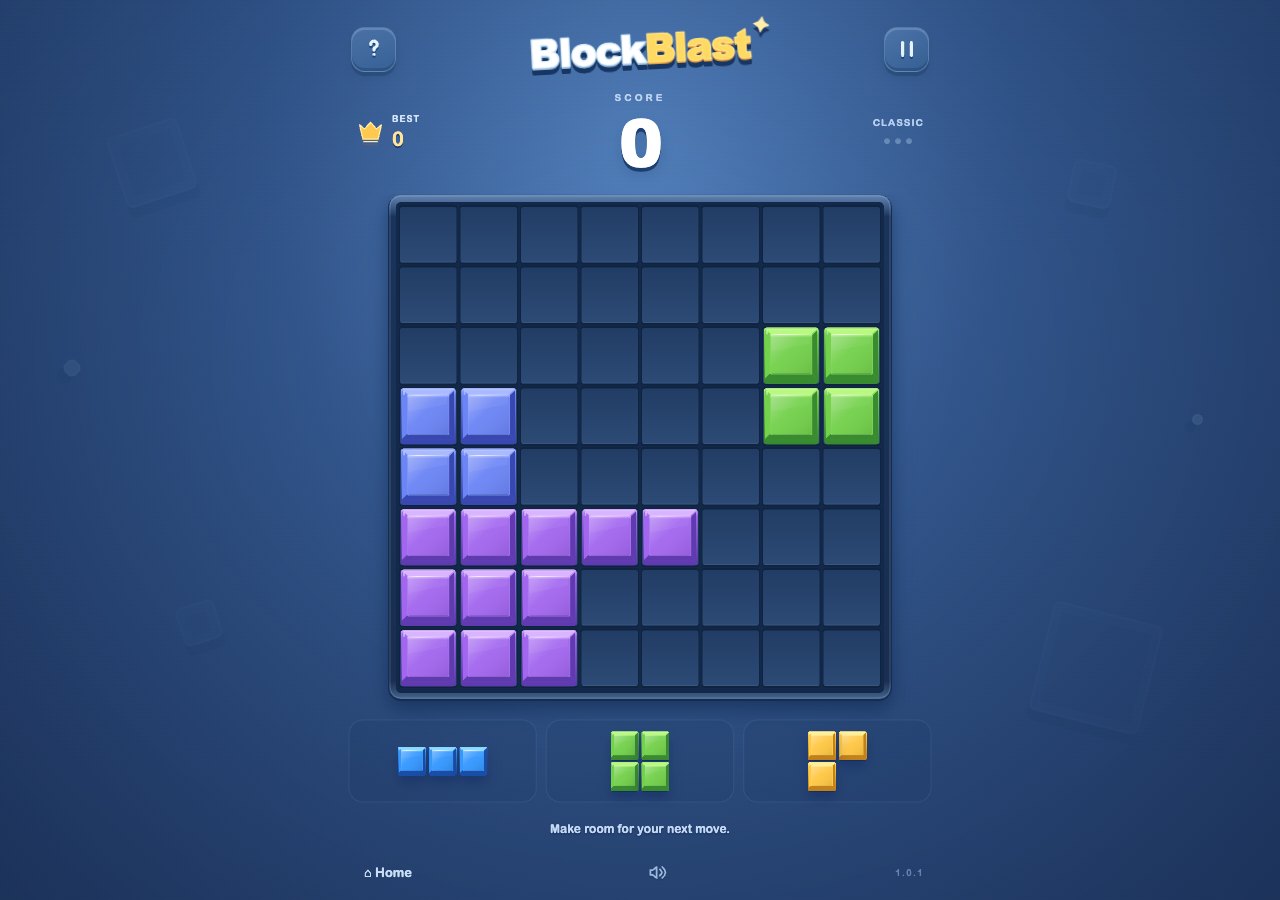
Plan the three-piece set before the first placement
Start with the least flexible block. Ask where it can fit, then see whether a smaller piece can clear a line that opens another destination. You do not always need to place the largest piece first, but you should know where it will go before spending its only space.
Imagine that a three-square bar fits in a nearly complete row while a larger piece has no opening yet. Placing the bar might clear that row and create the opening the large piece needs. Placing the large piece elsewhere first could occupy the bar’s route and lose both opportunities. The order is part of the puzzle.
Block puzzle strategy: keep gaps connected
Look for open areas that can accept several shapes, rather than a board full of narrow pockets. A square-shaped gap is different from a long channel even when both contain the same number of cells. Leave yourself a mixture of useful spaces when possible.
Clearing a line can restore flexibility, but chasing every immediate clear may create awkward holes. Look one placement beyond the reward: which of your remaining shapes will fit afterward? If a move completes both a row and a column, check the resulting open area before deciding whether to use it now.
Classic score or Adventure goals?
Classic mode is about keeping the board alive and improving your score. Adventure gives you a stated objective, such as reaching a target score or collecting required gems. A gem is collected by clearing its row or column; placing a block beside it is not enough.
In a gem level, plan a line through the target rather than clearing convenient lines on the other side of the board. Recheck the goal display as you progress. A move that is useful in Classic may spend valuable room without helping the remaining Adventure objective.
When the next block will not fit
Inspect every remaining piece before deciding that the round is over. A small legal placement may clear the space needed by a larger one. Conversely, if no remaining block fits, a nearly completed row does not provide a move by itself.
After a loss, remember the shape of the final unusable gap. That is a more practical lesson than memorizing a fixed opening: future pieces and positions differ. These tips describe the BlockBlast release on FoolFish, rather than level solutions or scoring promises for every similarly named block game.
Common questions
When do new blocks arrive?
After you use all three pieces in the current set.
How are gems collected in Adventure?
Clear the row or column containing a required gem.
Does having empty squares guarantee another move?
No. A remaining block must fit as a complete shape. Empty cells scattered around the board may be unusable.