
Mahjong solitaire strategy: choose pairs that open the board
A useful mahjong solitaire strategy is to compare what each pair will open before you remove it. The first matching pair you spot may be legal, but another pair can uncover more tiles or free a blocked row. Here is a practical way to make that comparison.
Separate a legal move from a useful move
First apply the rules: both tiles must match, neither can be covered, and each needs at least one open horizontal side. Strategy begins after this check, when you have more than one pair to choose from. A blocked tile is a future target, not a move you can take now.
A useful move changes your access to the board. It may uncover a face, free a row end, or give you a partner for an important tile. A pair sitting apart from the main stack can be removable without opening anything else. That does not make it wrong to remove, but it gives you a reason to inspect other options first.
Prioritize a pair that removes a cover
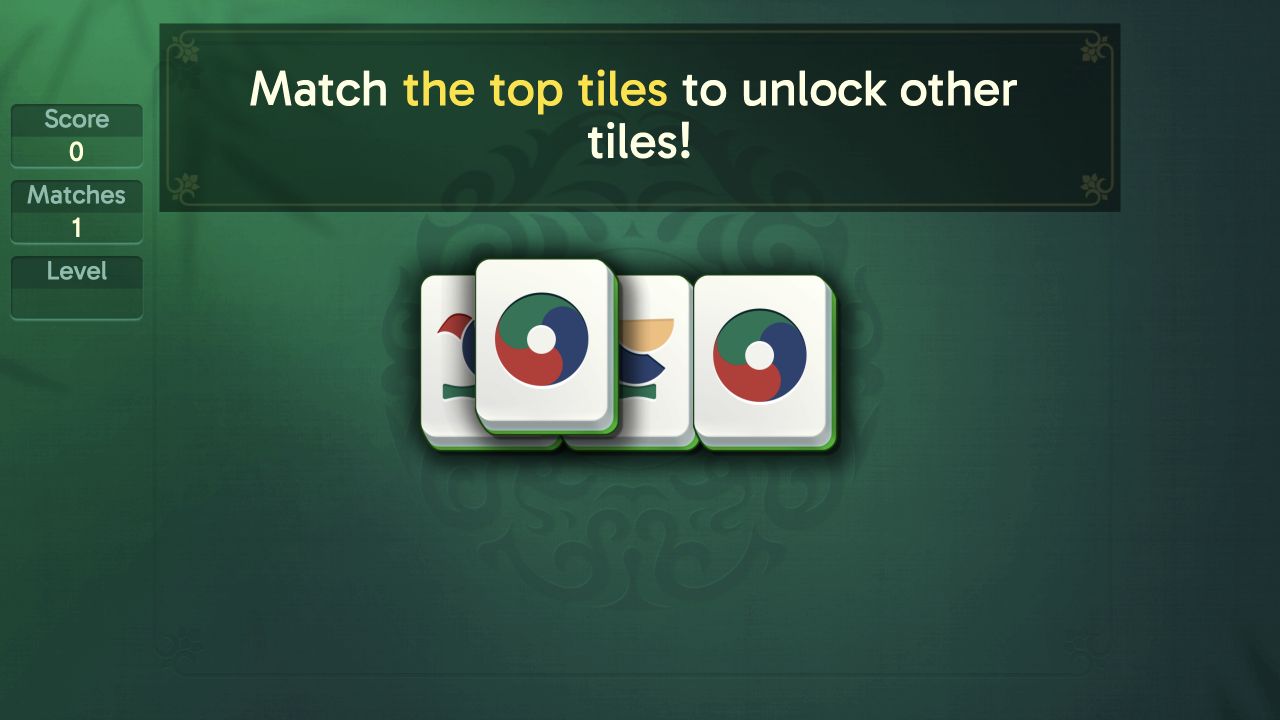
Look at the small example below. The front circular tile covers parts of the two bird tiles. Matching it with the circular tile beside the stack does two jobs: it removes one pair and gives access to the next pair. This is an easy way to see why position matters as much as appearance.
On a larger layout, compare how many tiles each available pair affects. A high tile crossing two lower tiles can be more useful than a high tile above an empty space. Do not blindly choose the highest tile: ask which faces become available after it leaves.
Recheck the tiles you have just exposed
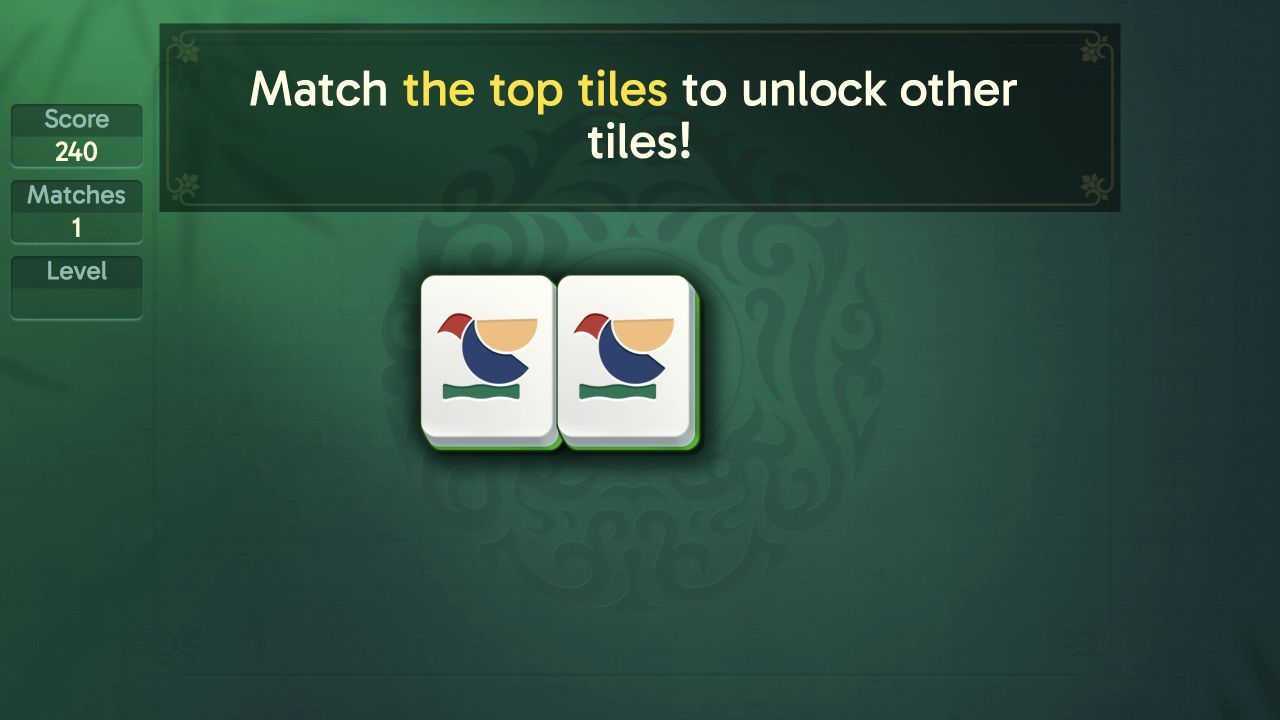
After the circular pair is removed, the bird tiles are uncovered. Their outer sides are open, so they can now be matched. Notice that the useful result is a new legal pair, not merely a larger empty patch of board.
Use this before-and-after check during play. Make a prediction, remove the pair, then look at the area again. If a newly exposed tile is still blocked at both sides, your next step may be to work along its row. This avoids the common mistake of treating every newly visible tile as immediately playable.
Open long rows from their ends
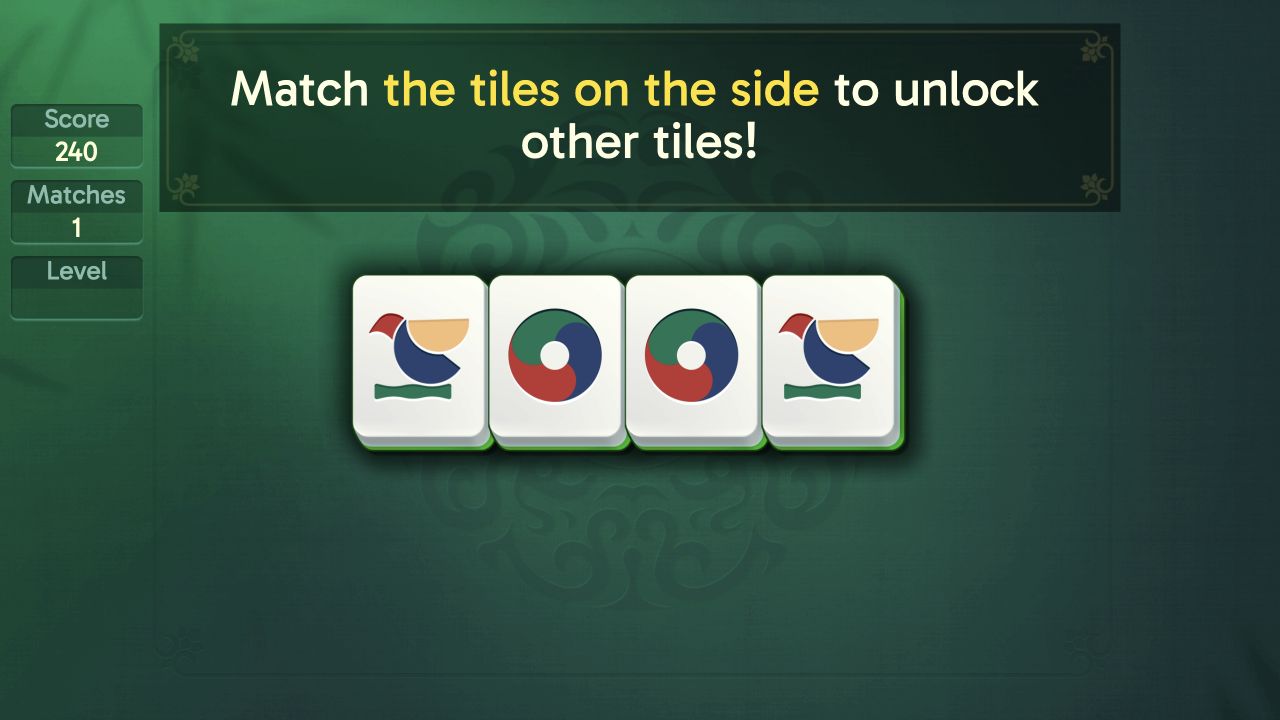
A long row often hides its useful choices in plain sight. Every face can be visible while the middle tiles remain blocked. Search for partners to the end tiles; removing those pairs moves the open edge inward.
In the four-tile example below, matching the birds at the ends frees the circular pair in the middle. On a complicated board, a row end may have its partner across the layout rather than beside it. Scan the whole board for that partner before deciding the row is a dead end.
When three matching tiles are available, compare the pairings
Suppose three available tiles have the same face. There are several ways to choose a pair, and each choice leaves a different tile behind. Instead of selecting the nearest two, compare the covers and neighbors around all three.
For example, tile A covers another face, tile B sits at the end of a long row, and tile C stands alone. Pairing A with B may open more of the board than pairing A with C. This is a way to evaluate the move, not a guaranteed solution: the hidden faces and later partners can still matter.
If a fourth copy is visible but blocked, consider how it could become available. Leaving a useful partner free can be sensible, but do not preserve every pair indefinitely. A reserved tile is helpful only if the move you delay has a clear purpose.
Look one move ahead before chasing several moves
You do not need to memorize the entire layout. Begin with one question: after this pair disappears, what legal pair could I remove next? If you cannot see one, compare another candidate rather than assuming the current pair is bad. Sometimes you must open unknown tiles.
When the next move is visible, look at what it opens in turn. This short chain is easier to check than a long guessed solution. Recalculate after each real move, because a hidden tile may change the choices you expected to have.
Use hint, undo and shuffle for different problems
A hint answers “what can I match?” rather than “what is the best complete solution?” Undo is particularly useful as a learning tool because it lets you see how a move changed the board. Neither technique makes every starting layout or every chain of choices a guaranteed win.
- Use Hint when you think you have missed an available match. Inspect why those two tiles are free before selecting them.
- Use Undo when you want to compare an alternative to a recent choice. Look at the newly exposed tiles in both branches.
- Use Shuffle when you want a different arrangement of the remaining tile faces. Rescan the board afterward; your previous plan may no longer apply.
Four habits that make the board harder to read
When stuck, slow your scan down rather than clicking faster. Sweep the exposed top faces, then the row ends, then compare possible partners. If no pair is available, use the tools for that situation instead of repeatedly testing blocked tiles.
- Selecting every isolated pair immediately without looking at the main stack.
- Assuming that a fully visible middle tile must be free.
- Remembering a pair from earlier and forgetting to recheck its availability.
- Shuffling as soon as the board looks unfamiliar, before scanning the row ends and top layer.
A three-board practice plan
These exercises are about learning the layout, not guaranteeing a particular win rate. Continue at a pace where you can still recognize the tile faces. When you are ready, return to Mahjong Clearer and practice on the board in front of you.
- On your first board, focus only on recognizing covered tiles and blocked sides. Explain each legal match to yourself.
- On your second board, compare two available pairs before each move. Choose the one that appears to open a useful tile.
- On your third board, use undo once to compare two branches. Note what each branch reveals instead of judging only the immediate score.
Common questions
What is a good beginner strategy for mahjong solitaire?
Choose legal pairs that uncover tiles or open row ends, then reassess the newly available choices. Compare two candidate pairs rather than automatically selecting the first one you see.
Should I always remove the highest tiles first?
No. High tiles can be useful targets when they cover other tiles, but their effect matters more than height alone. Compare what each pair actually opens.
Can a strategy guarantee that I win every board?
No. Layouts, hidden faces and previous choices affect what remains possible. The techniques here help you evaluate moves; they are not a guarantee that every board or every choice can be completed.
Is this advice for traditional multiplayer mahjong?
No. It is specifically for mahjong solitaire, a single-player tile-removal puzzle. Traditional mahjong hand-building and discard strategy are different topics.