2048
 FOOLFISHGAMES
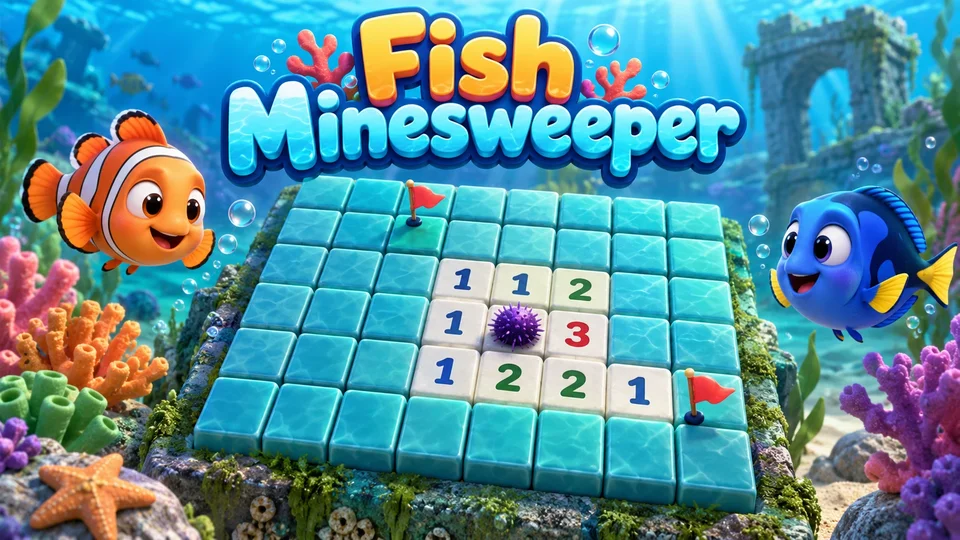
Explore a sea-themed Minesweeper board.
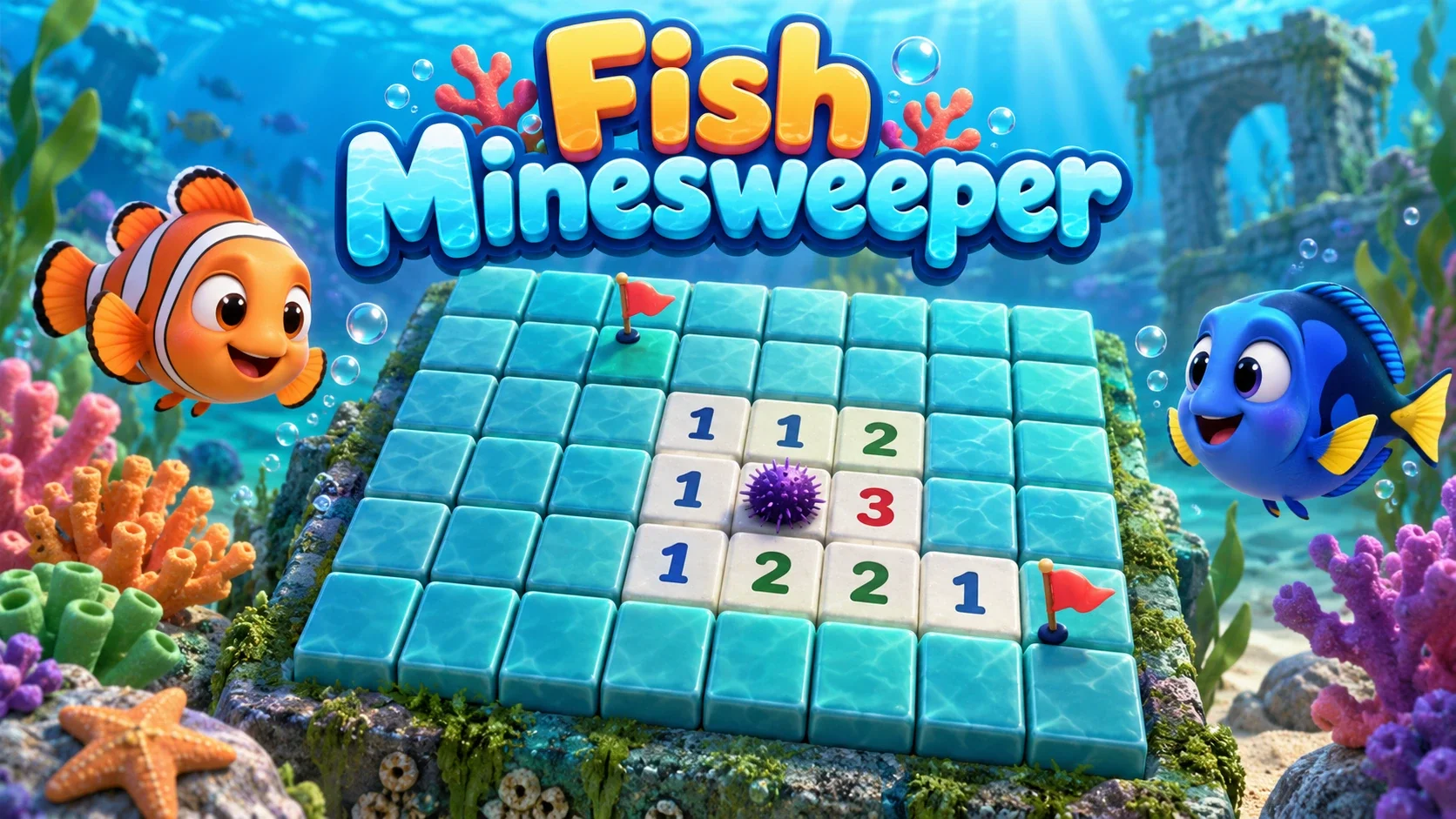
Explore a sea-themed Minesweeper board. Read neighbouring-mine clues, flag hazards and uncover every safe cell. Keep the original no-guess generation, native grid presets, Undo, Redo and portable saves.
Uncover every safe cell; each number counts touching mines. Click or tap to open. Right-click or Ctrl-click to flag; on touchscreens enable Flag mode to mark, then switch it off to open. Clicking an opened clue with exactly the required surrounding flags opens the remaining neighbours; incorrectly placed flags can cause a mine hit.
The default is a 9×9 square board with 10 mines and Ensure solubility enabled. The first opened cell starts safe native generation. The same parameters, seed and first-open cell reproduce the board; a different first cell can produce another layout. Type includes native square difficulties, wrapping grids and other tilings; Custom adjusts them.
On square grids, arrow keys move the cursor, Enter opens/chords and Space marks. Game → Preferences offers one-key shortcuts, flag highlighting and optional question marks.
A mine hit stops the board, but the original Undo can take it back while retaining the death counter. Redo reapplies a move; Restart resets this puzzle and New generates another. Solve reveals the board after it has started and is treated as assisted, not a natural win.
Save keeps the complete native current-puzzle history, elapsed time and preferences in a scoped checkpoint. Guests save in this browser; supported signed-in FoolFish sessions can sync progress across devices. Original Download/Upload save file and ID/random-seed entry remain available. There is no remote multiplayer, purchase or ad gate.
Sea sounds are optional and off by default. Fish marker artwork and sea-urchin hazards use exactly the same cells and original logic as Minesweeper.
Natural completion freezes the original elapsed timer. Undo or Restart after completion keeps that frozen time; New resets elapsed time. Solve is practice, without recording a normal win or loss, and its native clock may continue until natural completion.
Mouse
Touch
Keyboard
Fish Minesweeper brings an ocean palette, small fish markers and sea-urchin hazard art to a free browser minefield. Your task is still to uncover the safe cells. The pictures identify marks and hazards; there are no fish to merge, species to collect or matching tiles to remove.
The familiar number clues remain readable on the marine board. A clue tells you how many of its touching neighbours contain mines. The game uses the same native Mines engine as the classic version, so a change of theme does not change which cells are safe or what a click does.
Tap a covered cell to begin uncovering the field. Empty areas expand automatically, while numbered cells stop the reveal and give you information about nearby hazards. On the default square field, a clue can refer to neighbours at an edge or a corner; being diagonally next to a number still matters.
For example, a 1 means exactly one touching neighbour is a mine. If that mine is already correctly marked, the clue’s other neighbours are safe. If a clue is surrounded by exactly as many flags as its number, clicking the clue opens the unflagged neighbours. Recheck those marks first: the action counts flags and cannot correct a wrong assumption for you.
The fish-shaped flag is your own mark for a suspected mine. It does not turn a dangerous cell into a safe one. A right-click or Ctrl-click marks on desktop. For a phone or tablet, switch on Flag mode, tap the cells you want to mark, then switch it off when you want to open cells again.
Preferences can enable a question-mark stage when cycling a marker, and can control how neighbouring flags are highlighted. A question mark means uncertainty rather than a confirmed hazard. On a square board, keyboard players can move the cursor with arrows, press Enter to open or chord, and use Space to mark.
The first sea-themed board uses a 9×9 square grid with 10 mines. Mine placement for a fresh generated puzzle is completed when you first open a cell, protecting that starting position. The default Ensure solubility option uses the original generator to produce a field that can be reasoned through without a required guess.
Type offers the native larger and denser square presets, including 16×16 with 40 mines and 30×16 with 99 mines. Custom also exposes mine count or percentage and the solubility option. Turning that guarantee off allows random boards that may leave an uncertain choice; the fish artwork does not supply extra information about hidden cells.
You can use the same ocean theme on native grid alternatives. Honeycomb and triangular cells do not have the square board’s identical set of eight neighbours. Touching edges and corners follow the actual tiling. On a wrapping board, a clue at an edge can also be connected to cells on the opposite edge.
When changing Type, treat the field as a new puzzle and study the cells around each clue. New generates another board in the selected configuration. The original manual is linked inside the game for these geometry rules; the theme keeps the native cell shapes and hit areas instead of converting irregular fields into a different game.
An unflagged mine hit displays DEAD. This implementation lets you Undo that move and continue the same puzzle, while the death counter remembers the mistake. Redo can put the move back. Restart returns to this puzzle’s starting position; it does not request a new random field.
Solve is available after the board starts. It exposes the safe cells and marks mines while you are alive; after a hit it reveals mines and corrections. That is an assisted reveal, not a natural victory. You can Undo to return to the earlier board, or use New for a fresh puzzle with the current native settings.
A natural completion freezes the original elapsed timer for that puzzle. Undo or Restart after completing it retains the frozen time; New starts another puzzle with elapsed time reset. Solve is practice and does not necessarily mark native completion, so the original board timer can continue even though platform active-play timing is paused.
The Fish checkpoint contains the native board, its current-puzzle Undo/Redo history, elapsed time, deaths and preferences. Guest saves stay in this browser, and supported signed-in FoolFish sessions can sync them across devices. Conflicting device saves require a choice of which complete board to keep; damaged saves are preserved for attention.
Sea sounds are optional and start switched off. They add brief feedback without changing any move, clue or mine placement. Game → Download save file exports the original portable format, and Upload save file validates an import. ID and seed links identify the puzzle: to repeat a fresh seed’s generated field, use matching settings and the same first-open cell.
Open Minesweeper for the classic presentation of the same native engine. Its platform progress is separate from Fish Minesweeper. You can use native IDs and portable files to identify a puzzle; neither version has online rooms, competitive matchmaking or a purchase gate.
For a different ocean-themed challenge, try Fish Sudoku, where digits and candidate notes fill a number grid. Sliding Puzzle instead asks you to arrange tiles around a blank. Browse free puzzle games when you want a new kind of board rather than another minefield.
Open every cell that does not contain a mine. Fish-shaped flags record your deductions; placing all flags alone is not the objective. The native game marks the remaining hazards when the last safe cell is uncovered.
On a fresh generated board, the first opened cell triggers protected native generation. The default Ensure solubility setting builds a board intended to be deducible without guessing. Disabling it in Custom changes that guarantee; entered IDs carry the state encoded in their description.
Turn on the visible Flag mode checkbox, then tap to mark a cell with the fish flag. Turn Flag mode off to uncover cells. Right-click, Ctrl-click or square-grid Space use the same original mark action on other controls.
A mine hit displays DEAD, but Undo can reverse it and the death counter remembers the mistake. Solve reveals the board as a practice aid and is treated as assisted, not a natural win. Restart keeps this puzzle; New generates another. Solve is practice and does not record a normal win or loss. After natural completion, Undo/Restart keep the frozen original elapsed timer; New resets it. The native timer can continue after Solve if the puzzle was not naturally completed.
Save keeps its native board/history, preferences and sound setting. Guest saves are local; supported signed-in FoolFish sessions can sync across devices. Sea sounds are off initially and optional. IDs and native file exports transfer puzzles, with no remote multiplayer.